Table of Contents
- What an RV In Place Rental Actually Is
- RV In Place Rental Benefits Explained
- RV Rental vs. Bringing Your Own RV
- RV Rental Costs and Hidden Fees to Watch
- RV Rental Amenities and Hookups That Matter
- Long-Term RV Rental Options for Work and Relocation
- In-Place RV, Hotel, Cabin, or Mobile Rental: Which Fits?
- Conclusion
- Frequently Asked Questions
Last Updated: October 19, 2026
What an RV In Place Rental Actually Is
An RV in place rental is a recreational vehicle that stays parked at its destination, fully set up and ready to move into, rather than one you drive from place to place. You get the living space of an RV without the driving, towing, or setup work. At Cozy Hill RV & Cabin Resort, we offer this style of stay because it solves the problem most travelers actually have: the comfort of an RV vacation without the hassle of hauling one.
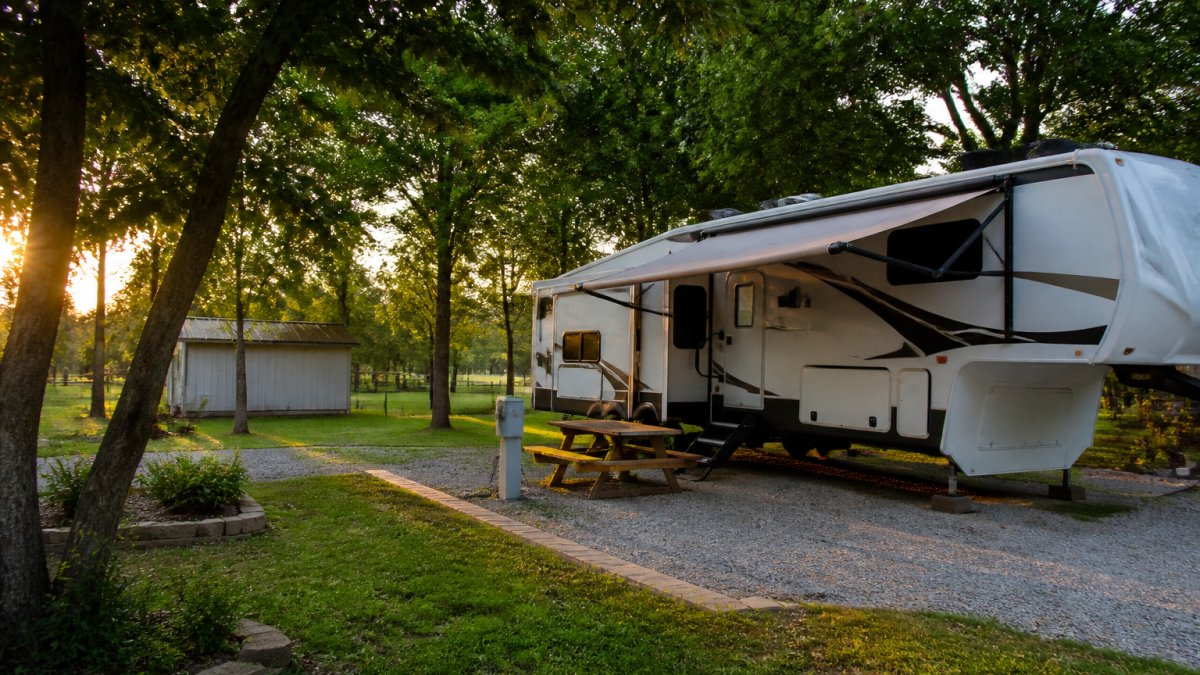
The unit sits on a level site, connected to power, water, and sewer. You arrive with a suitcase, not a hitch.
How It Differs From a Standard RV Rental
A standard rental hands you the keys and a vehicle, making you the driver, navigator, and setup crew: learning your rig's height, finding a dump station, and leveling on uneven ground after a long day.
An in-place rental removes every one of those steps. The RV is already parked and hooked up. The awning is out. The water runs. You unpack and start your vacation.
The trade-off is honest: you cannot drive your lodging to a new town each morning. If you want a moving road trip, a mobile rental fits better.
RV In Place Rental Benefits Explained
The core benefits of an RV in place rental come down to three things: you combine lodging and transport in one booking, you skip towing and setup entirely, and you avoid the ongoing costs of ownership.
Accommodation and Transportation in One
A traditional vacation splits your budget across a hotel room and a rental car. An RV vacation folds both into a single space, and an in-place rental keeps the accommodation half of that equation.
You still get the kitchen, bathroom, and sleeping space that make an RV cheaper to run than a hotel over several nights. Many travelers pair an in-place stay with their own car, parked right at the site.
The savings show up in meals. Cooking in an RV kitchen instead of eating out three times a day is one of the largest line items families control on a vacation budget.
No Towing, No Setup, No Ownership Costs
Owning an RV means insurance, registration, storage, maintenance, and depreciation, and those costs continue whether you use the rig or not. A rental turns all of that into a single booking fee.
Towing brings its own headaches: a travel trailer demands a properly rated tow vehicle, weight distribution, and practice backing into a site, while motorhomes demand comfort with a large vehicle and a parking plan at every stop.
An in-place rental erases the driving and towing question completely. The unit is level, connected, and checked before you arrive.
RV Rental vs. Bringing Your Own RV
Bringing your own RV makes sense if you already own one and use it often. For everyone else, the math usually favors renting, since ownership costs pile up in the background: insurance, registration, storage, tires, roof maintenance, and depreciation.
Renting also lets you try before you buy.
There is a flexibility point too. Owned RVs tie you to storage near home and a towing setup you maintain year-round. A rental ties you to nothing beyond the nights you book.
RV Rental Costs and Hidden Fees to Watch
The sticker price of an RV rental is rarely the full price, and the gap between the advertised nightly rate and the final bill is where most vacation budgets go sideways. Watch for these line items:
- Cleaning fees charged on top of the nightly rate, often a flat charge per stay rather than per night
- Security deposits that may be held for days after checkout, tying up funds you may need elsewhere on the trip
- Utility charges for electricity or propane beyond a set allowance, which matter most on long stays and in hot or cold months
- Pet fees that vary widely by property and are sometimes charged per pet per night
- Cancellation penalties that scale as your arrival date nears
- Delivery and setup charges if the unit is brought to your site
Ask for the total cost in writing before you commit. A property that quotes one clear number is easier to budget around than one that itemizes surprises at checkout.
How In-Place Costs Differ From Mobile Rental Costs
A mobile RV rental stacks several cost layers on top of the base rate: fuel for a vehicle that may get single-digit miles per gallon, nightly campground fees at every stop, dump station or sewer hookup fees, and wear-and-tear risk.
The trade-off is honest: an in-place stay usually carries a delivery or setup charge if the unit is brought to your site, and it may cap the electricity included in your rate. Those two line items are the ones to pin down first.
A Practical Total-Cost Checklist
Before comparing two properties, build the same worksheet for each:
- Nightly rate multiplied by the number of nights.
- Cleaning fee, added once.
- Pet fees, multiplied by pets and nights.
- Electricity allowance and the per-kilowatt-hour rate beyond it.
- Propane or utility surcharges.
- Delivery and setup charge, if any.
- Security deposit amount and when it is returned.
- Taxes and any local lodging charges.
- Cancellation terms and the penalty schedule.
A low nightly rate with heavy cleaning and utility fees can cost more than a higher rate with everything included. Always compare the total for your full stay, not the headline number.
At Cozy Hill, monthly stays include up to $100 per month in electricity, so you know where the utility line sits before you arrive. Pricing depends on your dates, site type, and length of stay, so check our website for current rates and a quote.
RV Rental Amenities and Hookups That Matter
Full hookups are the difference between a comfortable stay and a daily chore.
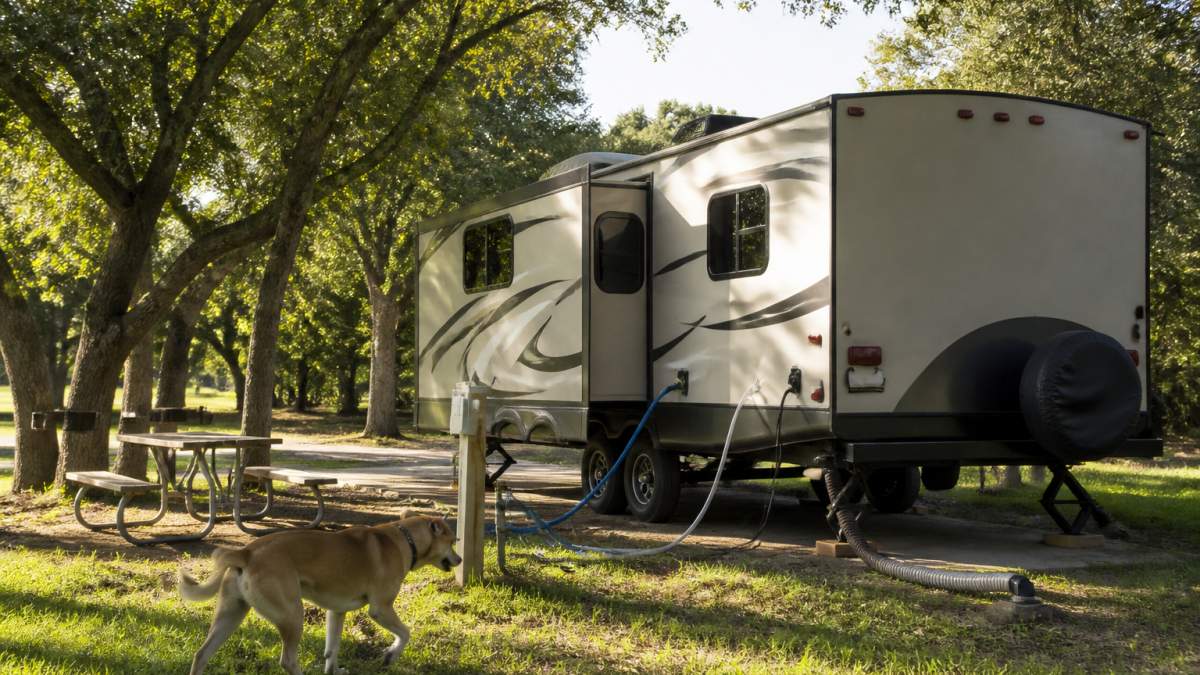
Beyond hookups, look for amenities that match how you travel. High-speed Wi-Fi matters if you work remotely, on-site laundry and showers matter on longer stays, and a real dog park matters if you travel with a high-energy pet.
Ask specific questions. "Is there a dog park" gets a yes from almost every property. "How large is the fenced area and is it grass or gravel" gets you an answer you can use.
Long-Term RV Rental Options for Work and Relocation
Long-term RV rental has become a practical housing answer for temporary workers, people between homes, and anyone relocating for a contract.
Confirm the terms that matter for a multi-month stay: the electricity allowance, the minimum commitment, and how the rate changes past the first month. Furnished cabins on the same property offer a second option if you want more space.
If you are moving to a new area for work, a monthly in-place stay lets you learn the neighborhoods before you sign a lease, a real advantage over committing to an apartment sight unseen.
In-Place RV, Hotel, Cabin, or Mobile Rental: Which Fits?
Each option fits a different trip, and the right answer comes down to four questions: how many locations you need, how many meals you plan to cook, how much space and privacy you want, and how much setup work you will do.
| Option | Best For | Effort to Set Up | Kitchen | Privacy | Mobility During Stay | Cost Pattern |
|---|---|---|---|---|---|---|
| In-place RV rental | Home base with full amenities | None, unit is ready | Yes | High, your own unit and site | You drive your own car | One booking fee, utilities may be capped |
| Hotel | Short city trips, no cooking | None | Rarely | Low, shared walls and hallways | Walk, transit, or rental car | Per-night rate plus meals out |
| Cabin | Families wanting more space | None | Usually | High | You drive your own car | Per-night rate, often higher in peak season |
| Mobile RV rental | Multi-stop road trips | Driving, towing, setup | Yes | High | Your lodging moves with you | Rental plus fuel plus campground fees |
What the Table Does Not Show
Three differences matter in practice and rarely make it into a comparison chart.
Total cost over a week. A hotel bill grows with every meal eaten out, parking charge, and lobby-shop water bottle.
Privacy and space. A hotel room is one room. An in-place RV gives you a living area, kitchen, bathroom, and sleeping space separated by walls or curtains, plus a site with a picnic table and outdoor room.
Mobility during the stay. A mobile rental lets you wake up somewhere new. An in-place rental, cabin, and hotel all keep you at one address, and you explore from there in your own car.
Matching the Option to the Traveler
- Families with children: an in-place RV or cabin, for the kitchen, the separate sleeping space, and the outdoor site.
- Older travelers and anyone with mobility needs: an in-place RV with a level pad and full hookups removes driving and setup, but confirm the unit's entry steps and bathroom layout before booking.
- Remote workers: an in-place RV with high-speed Wi-Fi and a monthly rate functions as a small apartment with a yard.
- First-time campers: an in-place rental lets you test RV life without towing or setup, which is the lowest-risk way to learn whether the layout suits you.
- Multi-stop road trippers: a mobile rental, because the lodging moves with you.
- Short city breaks: a hotel, because you will not use a kitchen or a site.
How to choose in four steps:
- Decide whether you need to change locations during the trip.
- Count how many meals you plan to cook versus eat out.
- Confirm the total cost, including fees and utilities, for your full stay.
- Check the cancellation policy and on-site support before you book.
Conclusion
Choosing the right stay comes down to how much effort you want to spend on your vacation versus enjoying it. An RV in place rental removes the towing, setup, and ownership costs while keeping the kitchen, space, and comfort that make RV travel appealing. At Cozy Hill RV & Cabin Resort, we offer shaded full-hookup sites, furnished cabins, and move-in ready in-place options with high-speed Wi-Fi, on-site laundry, and a dog park, plus up to $100 per month in electricity included on monthly stays. Book now and settle into a peaceful, wooded home base without touching a hitch.
Frequently Asked Questions
What is an RV-in-place rental?
An RV-in-place rental is a stationary RV already parked, leveled, and connected at a campground or resort. You book it like a cabin: the unit stays put, the hookups are live, and you arrive to a furnished space with running water and power. No towing, no hitching, no setup on arrival. It suits travelers who want the feel of an RV vacation without owning or driving a motorhome or travel trailer.
What are the hidden costs when renting an RV?
Beyond the nightly rate, budget for cleaning fees, security deposits, pet fees, and any charges for extra guests or early check-in. Mobile rentals add fuel, mileage limits, generator use, and propane. In-place rentals usually fold utilities into the rate, though some cap electricity, so ask what is included before you book. Confirm the cancellation policy and deposit refund terms in writing.
Can you stay long term in an RV-in-place rental?
Yes. Many resorts offer weekly and monthly rates for in-place units, which makes them workable for temporary workers, families between homes, and people relocating for a job. Monthly stays often include a set amount of electricity, with usage beyond that billed separately. Ask about lease terms, notice periods, and whether the rate changes by season before committing to a longer stay.
Is an RV-in-place rental a good option for first-time RV travelers?
It is one of the easiest ways to try RV living. You get the space, kitchen, and layout of an RV without learning to tow, back into a site, or manage hookups. That makes it a low-risk test before buying a motorhome or travel trailer. It also helps travelers who want the RV experience but are not comfortable driving a large vehicle on highways or through campground roads.